ThinkNode G3��is a high-performance, compact LoRaWAN gateway designed for IoT communications by Elecrow. It uses the��ESP32-S3 dual-core processor��and��Semtech SX1262 transceiver, equipped with a��240MHz��dual-core main control, integrated��Bluetooth, WiFi and optional 4G modules(Not yet released), and can provide flexible network backhaul methods. The SX1262 transceiver, combined with the internal TCXO crystal oscillator, ensures the��ultra-long-distance transmission��and��high-frequency stability��of the ThinkNode G3 while maintaining��low power consumption. It supports the configuration of��US915MHz/EU868MHz��frequencies, supports seamless conversion between��LoRa and IP protocols, can efficiently receive LoRa signals and transmit themle data interaction. Its simple��configuration interface��supports quick adjustment of LoRa parameters on mobile phones or PCs, and supports��remote firmware upgrades, greatly improving deployment and maintenance efficiency. ThinkNode G3 supports development languages such as��MicroPython, C/C++, and is compatible with��ESP-IDF and Arduino IDE��development environments, providing engineers and technology enthusiasts with extremely high development flexibility and simplifying the secondary development process.
ThinkNode G3 adopts a modern smart home style design and is equipped with a��multi-functional fixed base. It supports multiple installation methods, such as wall, plate, and slide rails, to adapt to diverse indoor and outdoor deployment needs. It is widely used in��smart cities, smart agriculture, industrial Internet of Things, smart buildings, logistics managemtrong> and other fields. It is a key hub in the Internet of Things communication architecture.
Flexible network backhaul
Supports multiple network backhaul methods, including WiFi and Ethernet, adapting to different network environments to ensure uninterrupted data transmission.
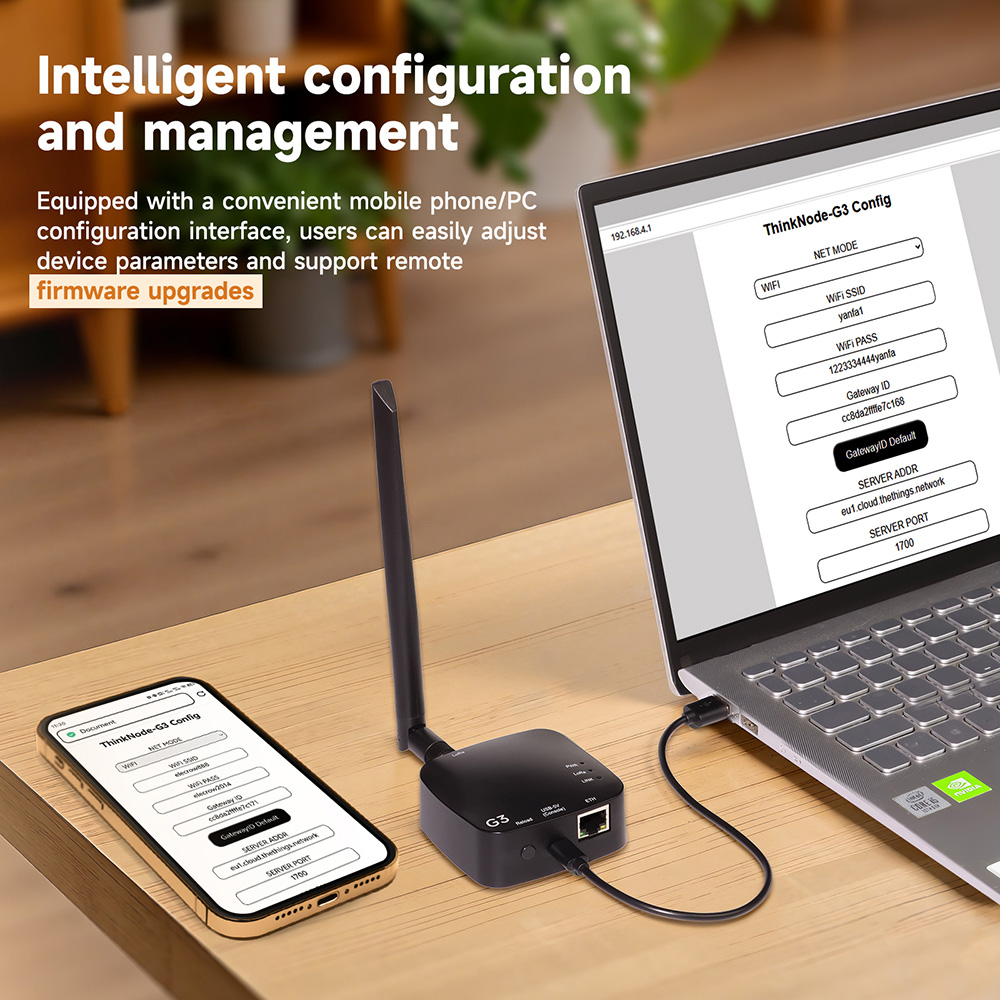
Intelligent configuration and management
Equipped with a convenient mobile phone/PC configuration interface, users can easily adjust device parameters and support remote firmware upgrades.
Compact and beautiful design
Integrating the aesthetics of smart home, it is equipped with a multi-functional mounting base and can be flexibly deployed on walls, slides and other scenes.
Stable and reliable communication��
Realize efficient conversion between LoRa and IP protocols, ensure seamless interaction between devices and cloud data, and facilitate global IoT connections.
Network Topology
Hardware Overview
Feature
Adopts ESP32-S3 240MHz dual-core main control, with SemtechSX1262 LoRa transceiver, supports long-distance, low-power communication.��
The main frequency is up to 240MHz, with 4M Flash and 384KB ROM storage.
The internal TCXO crystal ensures accurate frequency and improves communication stability.
Supports WiFi, Ethernet and multiple backhaul methods to meet the needs of different network environments.
Provides mobile phone/PC configuration interface, supports parameter adjustment.
Support remote firmware upgrade.
Compact design and integrates smart home aesthetics, equipped with a multi-functional mounting base, can be flexibly deployed on walls, slides and other scenes.
Support MicroPython, C/C++ development languages, and is compatible with ESP-IDF, Arduino IDE development environments.
Low power consumption, the maximum working current is about 110mA (MCU+LoRa transceiver)
��
Target Group
Agribusiness/Industrial manufacturers/Construction management companies/Logistics service providers/Community organizations/Environmental monitoring/Institutions/Individual consumers/Technology enthusiasts.
Application
Smart Cities/Smart Agriculture/Industrial IoT/Smart Buildings and Home Automation/Logistics and Supply Chain Management/Smart Metering/Environmental Monitoring/Emergency Services and Disaster Response/Consumer Applications
��
Specification
Main Processor (ESP32-S3-WROOM-1-N8R8)
CPU/SoC
Equipped with high-performance Xtensa32-bit LX7 dual-core processor
Frequency
Up to 240MHz
System Memory
512KB SRAM,��8M PSRAM
Storage
8M Flash���384KB ROM
Development language
MicroPython, C/C++
Development environment
ESP-IDF, Arduino IDE
Network configuration interface
Self-developed web console with network and LoRaWAN server configuration, OTA upgrade